
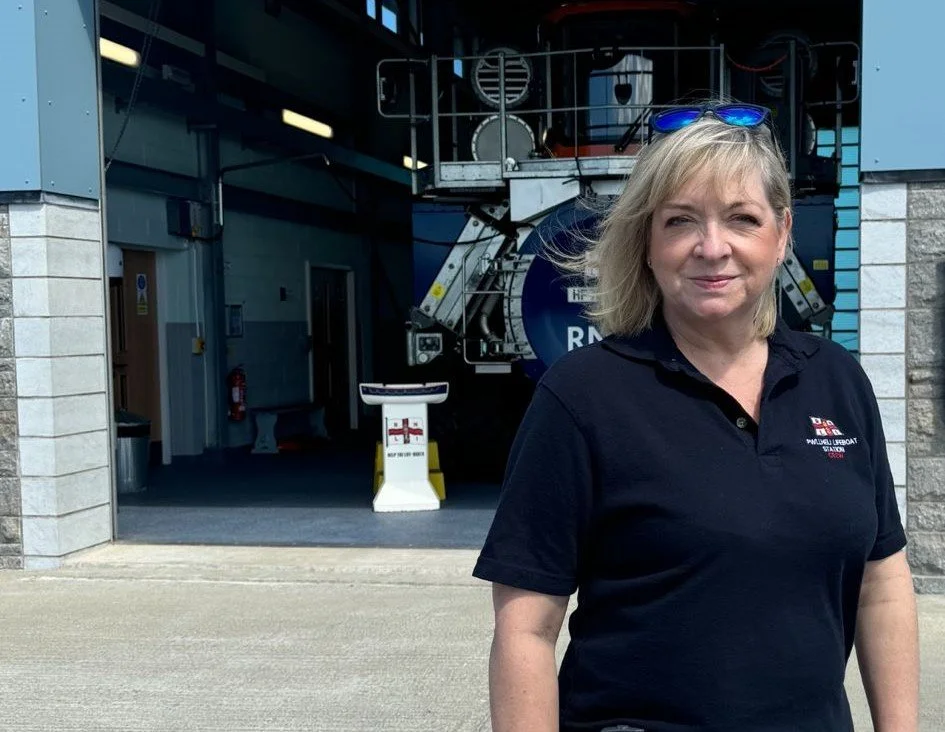
Photograph provided by RNLI
Almost one in three people in Wales volunteer but North Wales doctor asks whether women's health is being overlooked
Almost one in three people in Wales volunteer, giving their time to charities, sports clubs and community organisations. But for many women, years spent volunteering will coincide with menopause, which can bring symptoms including fatigue, disrupted sleep, joint and muscle pain, headaches and dizziness, potentially making physically demanding activities feel harder.
As Wales marks World Menopause Day on 18 October, North Wales GP and British Menopause Society Registered Menopause Specialist Dr Lucy Mather is asking an overlooked question: what happens when women's health starts getting in the way of the voluntary roles they love?
The question is particularly timely. From spring 2027, large employers, including qualifying voluntary-sector organisations, will be required to have an action plan setting out how they will support employees experiencing menopause. But the requirement focuses on employees, not the volunteers on whom many charities and communities depend.
Dr Mather said: “We've made enormous progress in recognising that menopause can affect women at work and asking what employers can do to help. But what about the woman who finishes work and then crews a lifeboat, coaches a children's sports team, fundraises for a charity or helps run a community group?
“Almost a third of people in Wales volunteer. We talk a lot about how important those volunteers are to our communities, but perhaps not enough about what we need to do to keep the volunteers themselves fit and well.”
On World Menopause Day, Dr Mather will put that principle into practice by joining female Pwllheli RNLI volunteers and allied services in North Wales for a dedicated women's health and wellbeing session. The RNLI provides a powerful example of the contribution volunteers make. In Wales alone, lifeboat crews launched 1,180 times during 2025, aided 948 people and saved 51 lives.
Dr Mather's session will help women recognise health issues that can affect them at different stages of life and understand the treatment, support and lifestyle changes that may help. As well as perimenopause, menopause and post-menopause, she will discuss periods, pregnancy and postnatal health, PMS and PMDD, premature ovarian insufficiency and bladder and urinary health.
Lyndsay Harrold, Launch Authority (LA), at Pwllheli RNLI, said: “Our volunteers give a huge amount of their time and energy to helping other people, so it is equally important that we think about their own health and wellbeing.
“For women, there can be times in their lives when changes to their health affect how they feel physically and mentally. We want our volunteers to feel able to talk about those things and to have the information and support they need to look after themselves and continue enjoying the roles that mean so much to them.
“We’re really pleased to welcome Lucy to spend time with our volunteers and create an opportunity to talk openly about women’s health, ask questions and learn more about the support that is available.”
Dr Mather added: “We’ve rightly started asking how we can help women stay well at work through menopause. But good health is also about being able to keep doing the things that make life enjoyable and meaningful. If volunteers spend so much of their time looking after our communities, we should be asking what we can do to look after them too.”